And We Are Back!


It has been a while. I believe a few years. My last post was a pretty depressing one about the death of our two local National Wildlife Refuges. It was sad… It was devastating. In the years since that post, the refuge saw years of absolutely NO water! Horrible infestations of grasshoppers, no large flocks of migrating birds.


Enter Spring of 2024. Incoming water. Both on the Tulelake National Wildlife Refuge and the Lower Klamath National Wildlife Refuge.
Spring was in the air. I shed a tear when I saw the water coming into both refuges.
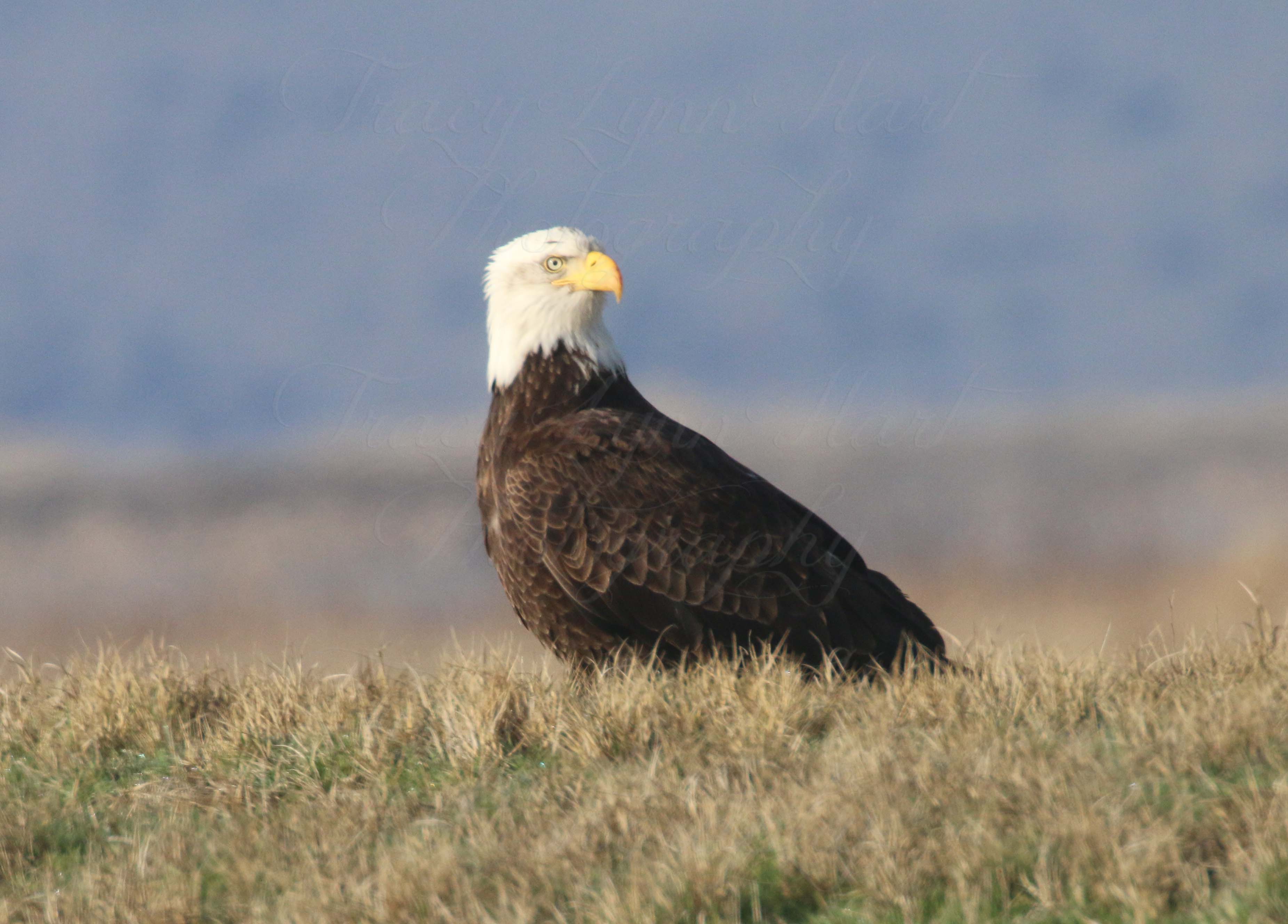
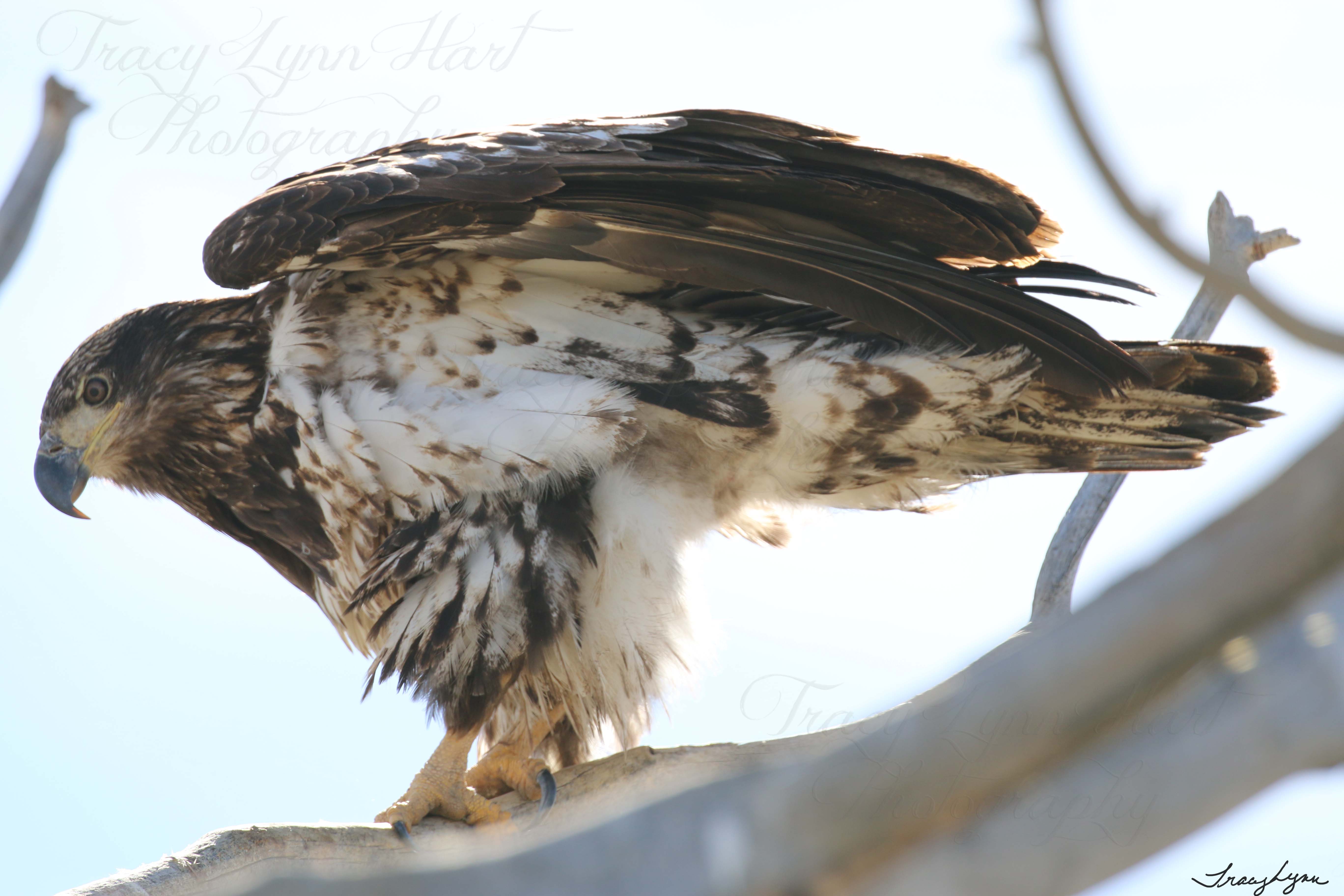
The nesting bald eagle pair was still there through it all. Where the Egrets and Herons last had their Rookery, the Crowned Night Herons took it over, and it was an amazing year for them! Also, for the geese and ducks!

Enter 2025. A very slow start to winter. And then WHAM! On January 31st, it began to snow, and it did not stop for a solid week. We had 3.5 feet on the mountain at home and 2.5 feet at the refuges. It was interesting. It was sad… and it was an experience I am in no hurry to go through again.
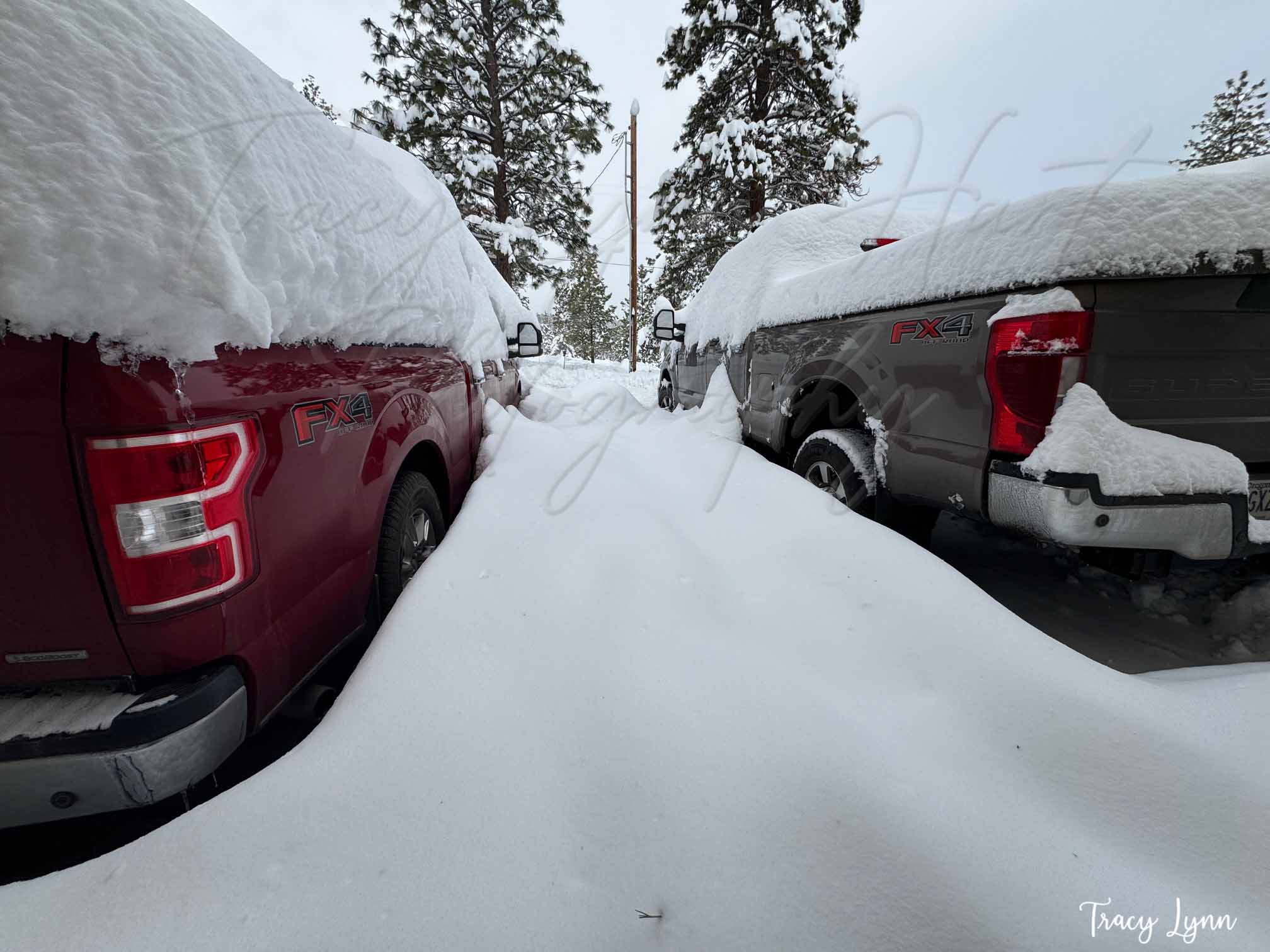
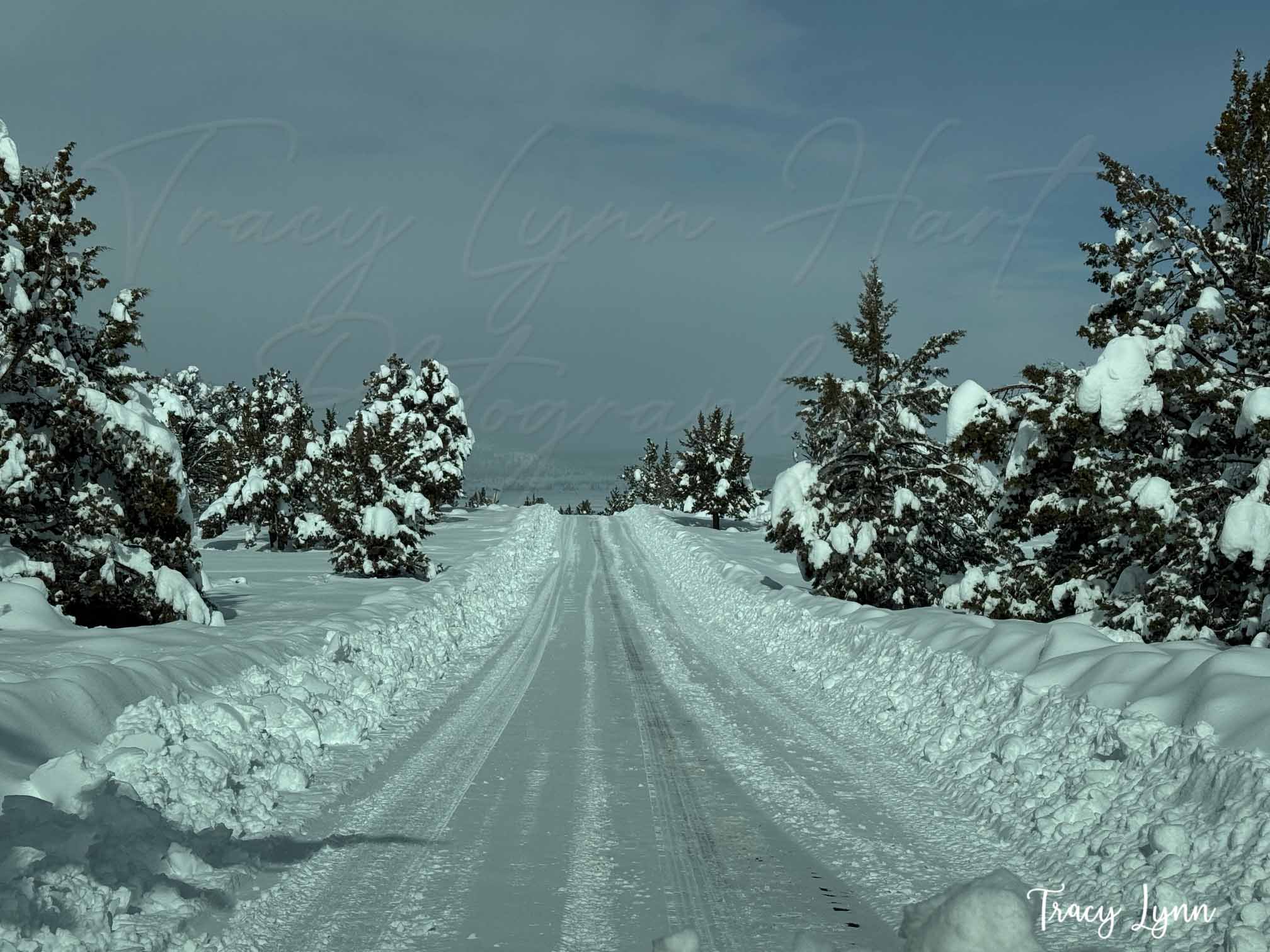
Why was it interesting? Because that is a lot of snow! That is a lot of the color white! It’s heavy to shovel, and no fun to be “snowed in”. I can only imagine what the ranchers and farmers in our area were going through! Trying to get feed to the livestock. And maintain paths for them to be able to get around as well. I heard stories of our locals having issues with chicken coops collapsing under the weight of the snow and losing some of their flock.
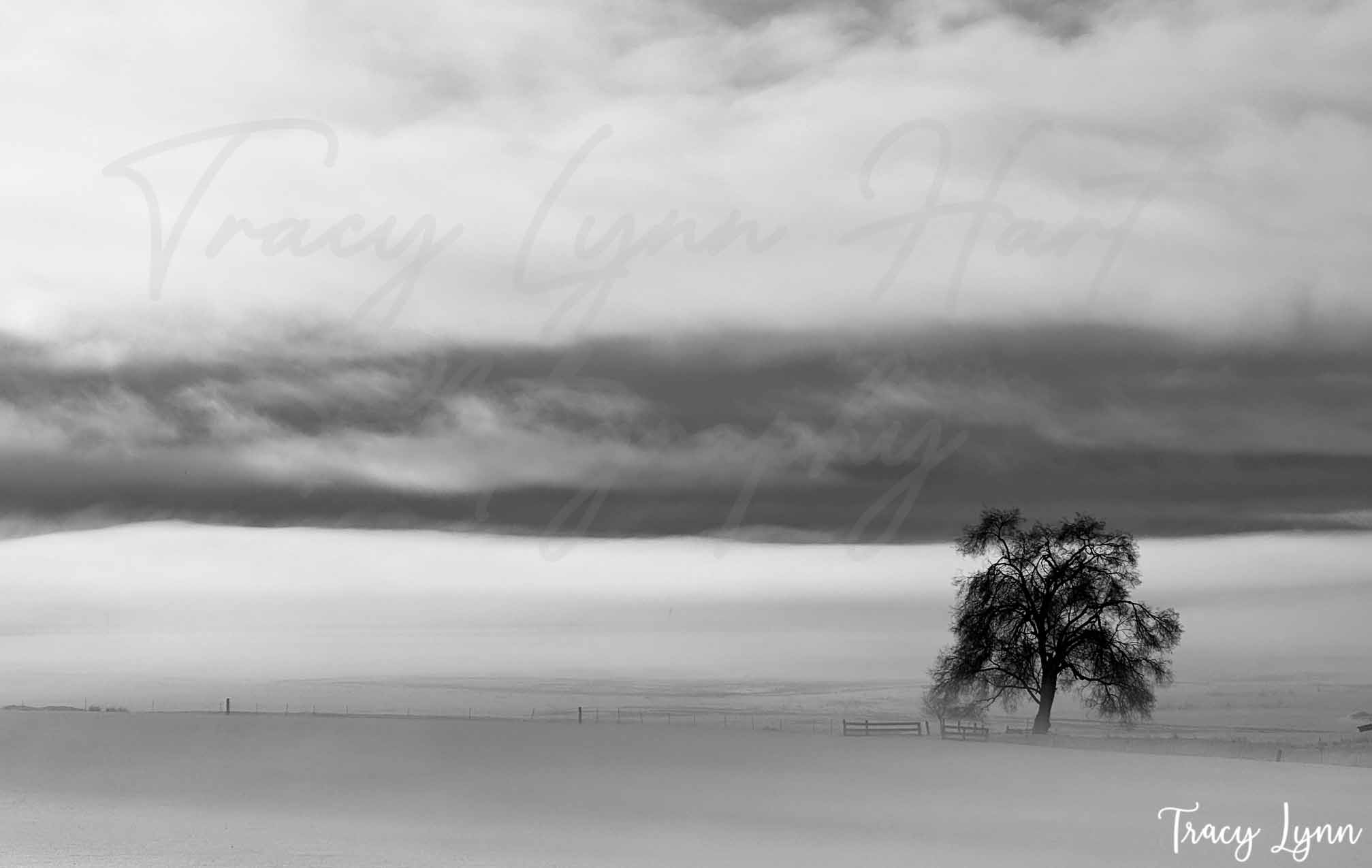

The sad… imagine 2.5 feet of snow everywhere. What does this do for the birds that are ground nesters? The birds that rely on foraging for food, such as mice? It wasn’t pretty. Birds were flocking to the highways and byways to just find a place to rest their weary bones for the night and forage for food. Sadly, there was no food on the roads. So, the refuges actually had to put feed out for the birds. The raptors suffered greatly, not being able to hunt for their food for 10 days. I do know there were a lot of birds that starved to death. How sad is that? While the snow has been amazing for the water tables and getting us out of a drought, it was very sad to see!


Spring forward to today. The trees are waking up, the fields are getting green, and things are coming alive. Although we still have snow in the forecast, things are finally warming up!
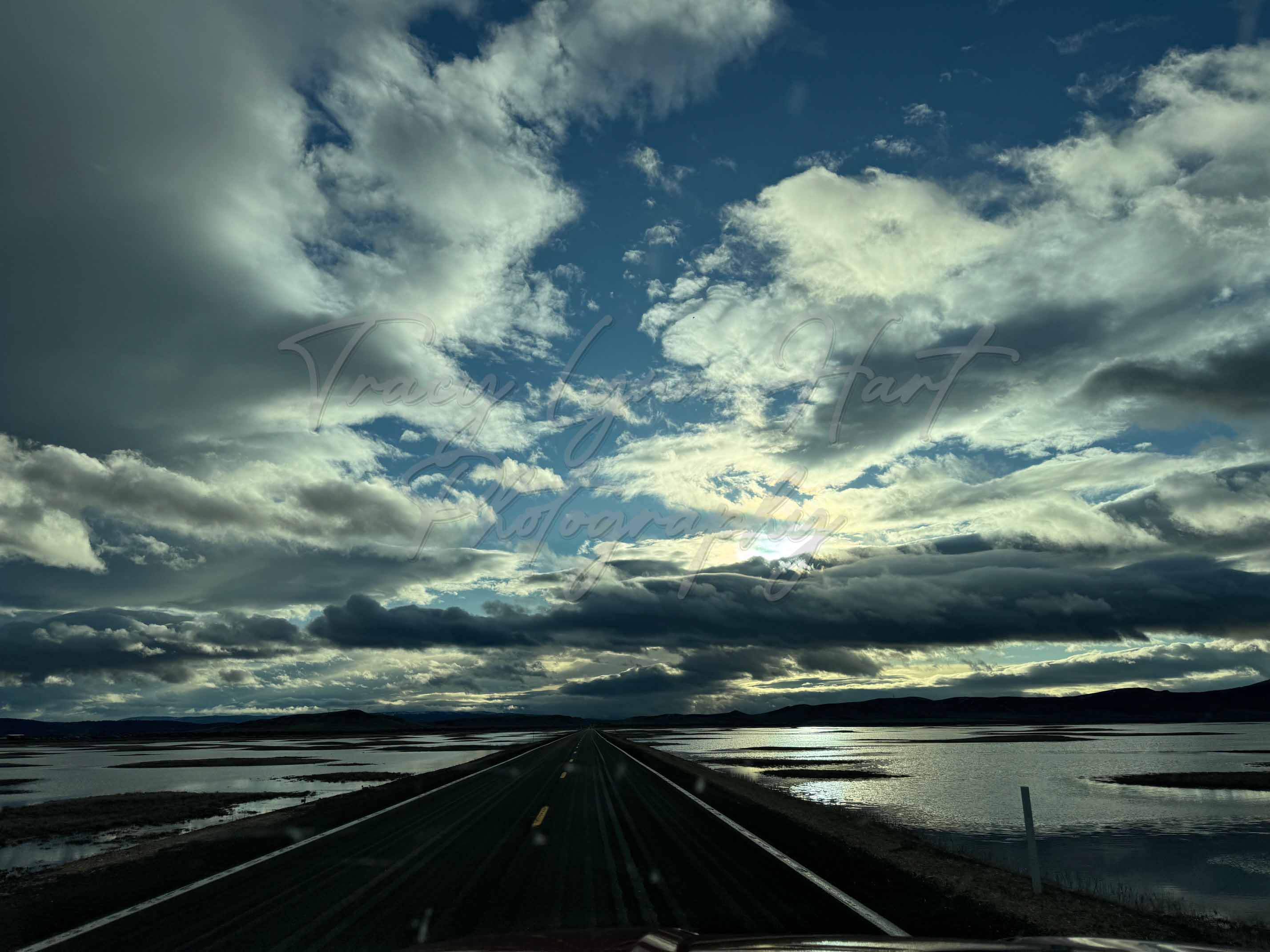
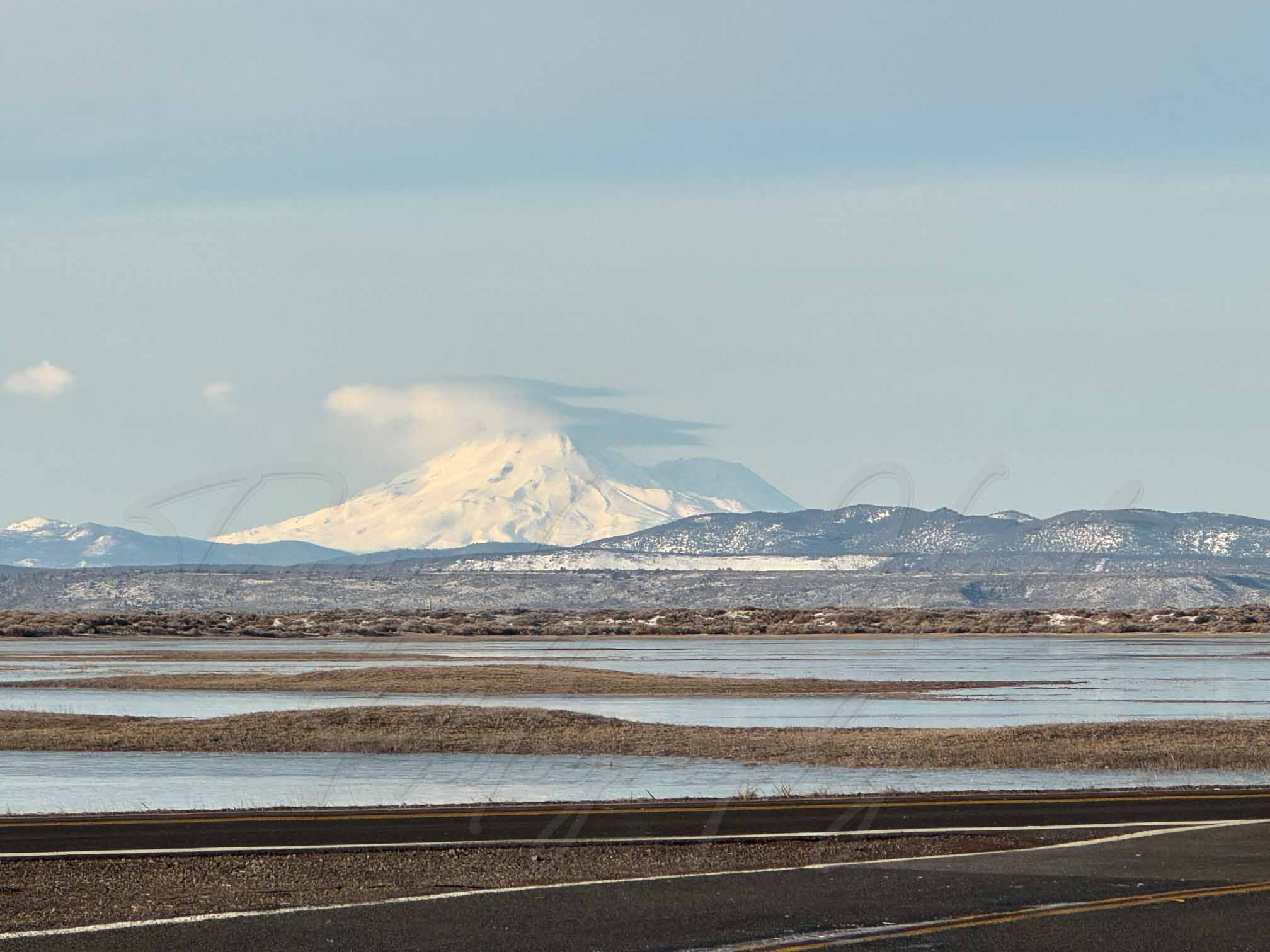
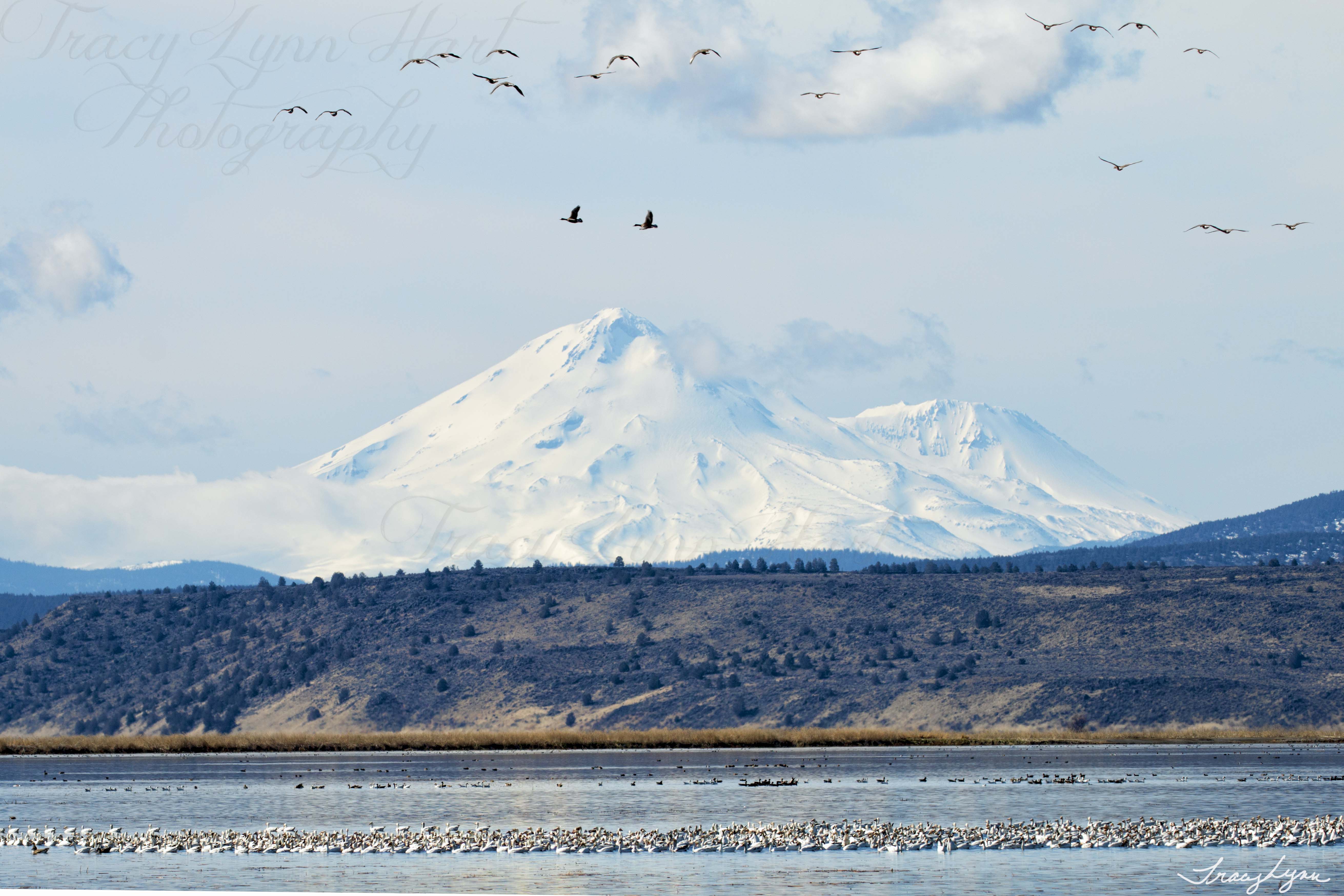
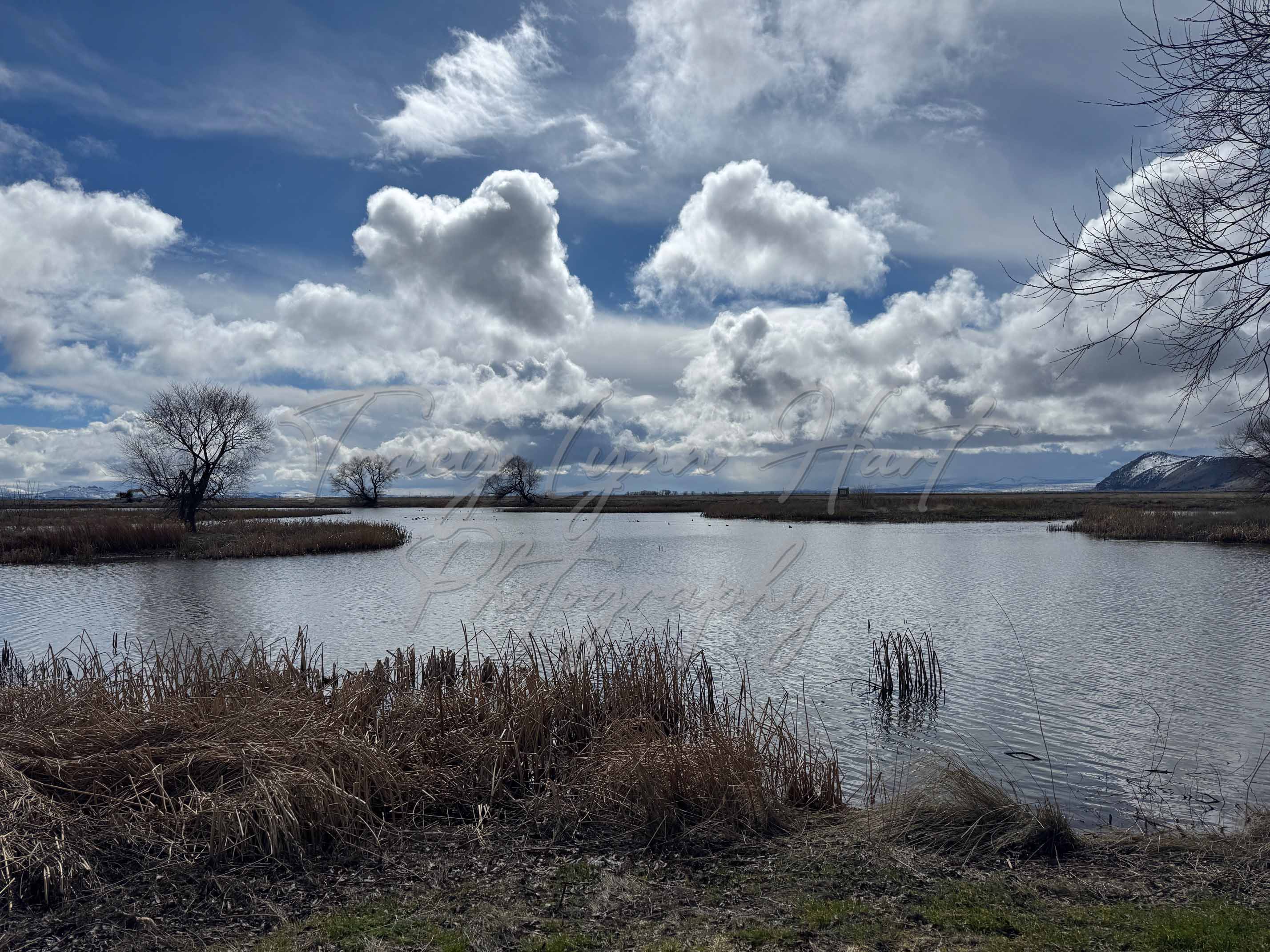
Lower Klamath Wildlife Refuge and the Tule Lake National Wildlife Refuge have more water than they have seen in years. We are talking full. Thankful for the water for sure. There are no natural resources to fill our refuges, so we rely on canals to get water. With the melting snow pack and abundance of water, they didn’t have to fight for water this spring. Not to say that won’t change this summer.
Tulelake Refuge had a severe outbreak of Avian Botulism last year in July, and they lost over 100k birds. It was devastating. This is what happens when a wildlife refuge can not get Fresh water. The water received in the spring of 2024 was great! Don’t get me wrong, but botulism is in the ground. A ground that had been dry for four years. And the water was being recirculated over and over and over, and what happens? Yep… disease. Something that may or may not have finally gotten the attention it deserved. I have read many articles and social media posts blaming the Refuge for this outbreak and that it was all their fault. I know the truth, as do most level-headed people. It had nothing to do with management; it had everything to do with no fresh water! Did it get political? Yes. Were hunters and farmers, and visitors affected? Of course. We can only hope it is never that bad again.

The refuge was able to, with the sole help of an organization called Bird Ally X and many volunteers, to rehabilitate successfully 958 birds. Sadly, they could not help them all. The birds they did save were released onto the Lower Klamath National Wildlife Refuge, which did not have the Avian Botulism outbreak. Why?? Better wetlands. Not all of the refuge remained dry and desolate; there was an area that had water throughout the drought. And a cleaner water source, so to speak.


Let’s get away from the sadness and spring forward to today!
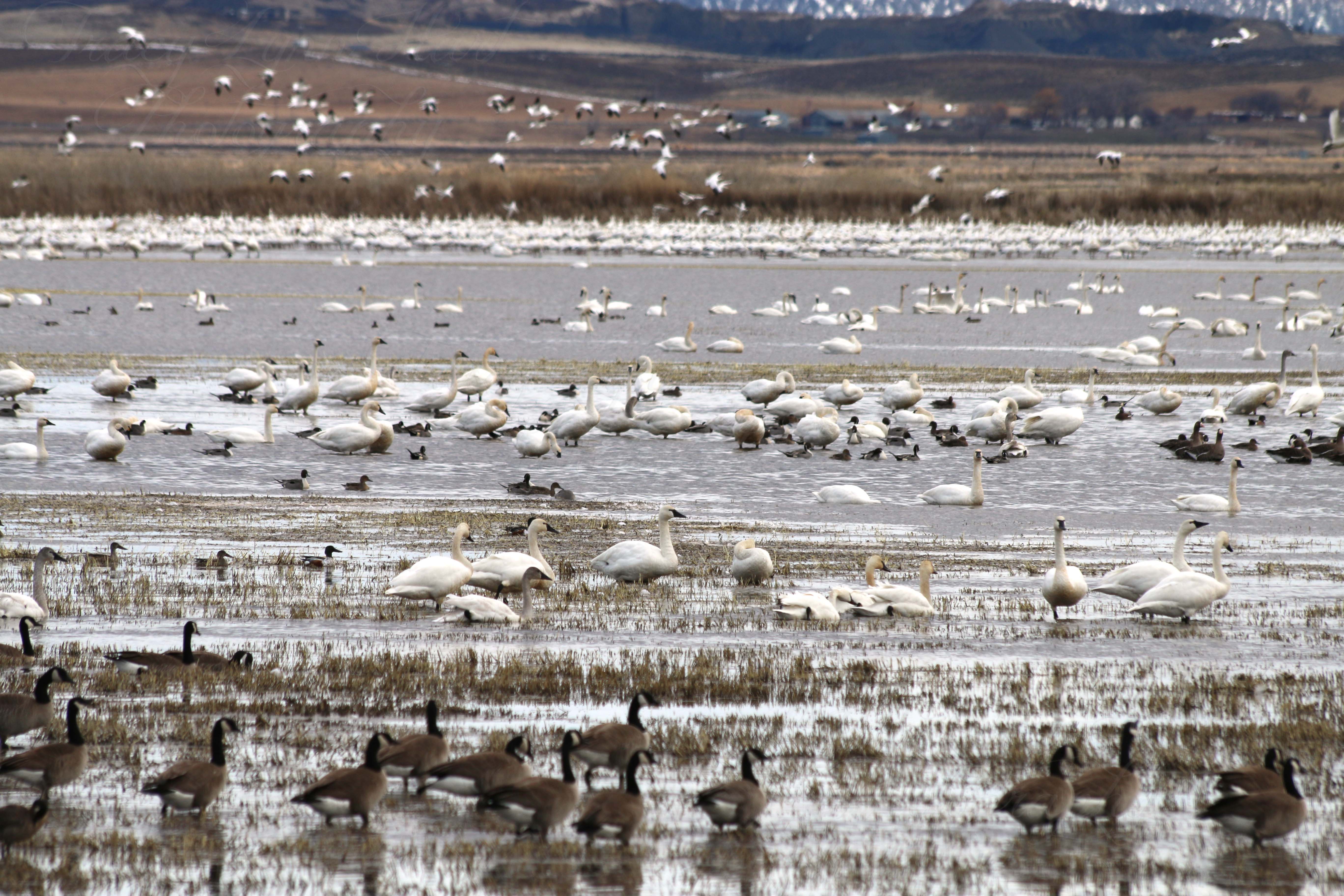
Water, Water Everywhere! It is amazing and wonderful. Our migratory numbers have dropped off due to the no-water years, but the number of migrating waterfowl was still something to see. Geese, Ducks, Tundra Swans, Hawks, Cranes. Eagles. All in abundance! It is amazing to see. I am including a clip of a video of a drive along Highway 161, also known as Stateline Highway, which is the California-Oregon border. The water is abundant and so wonderful to see.


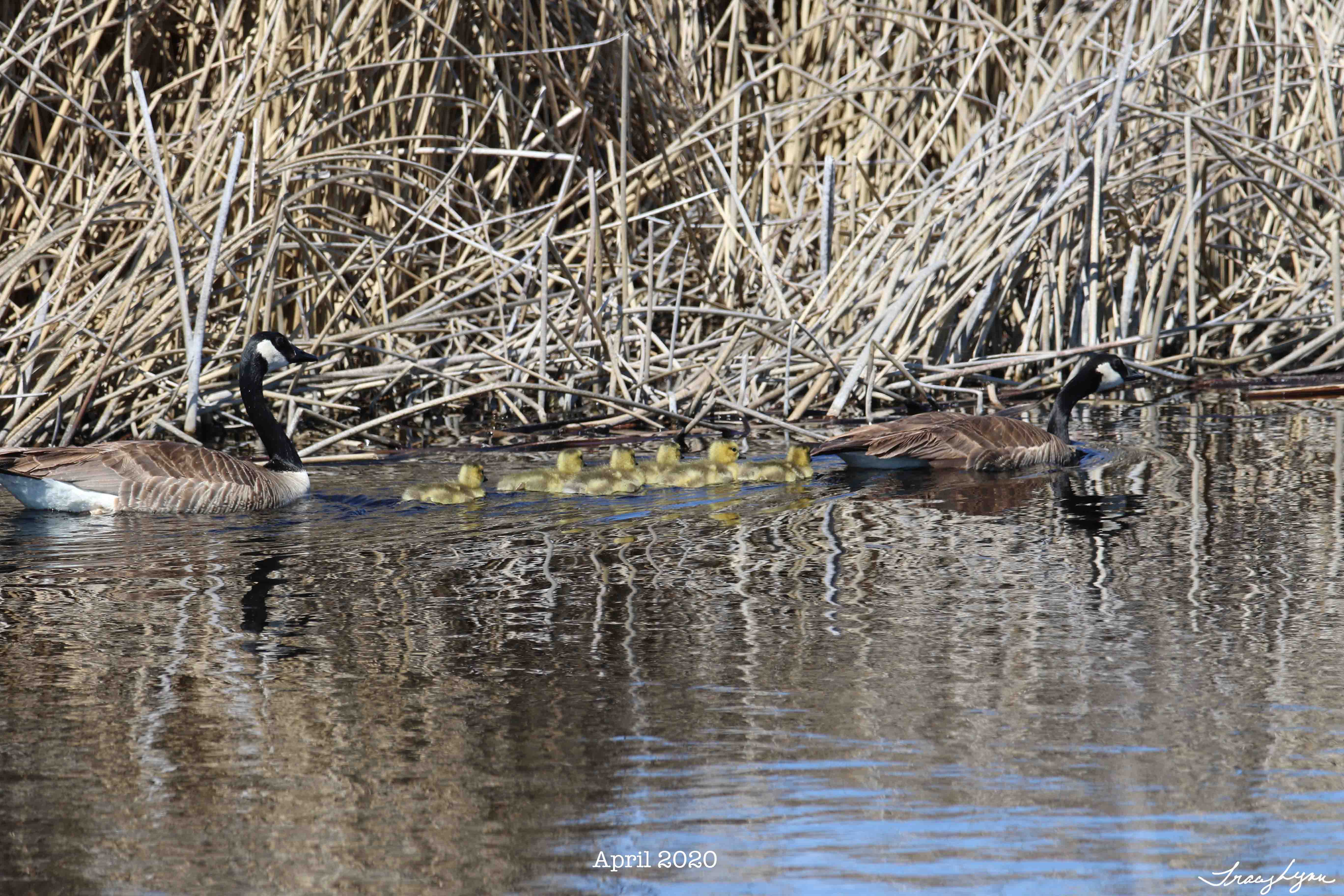
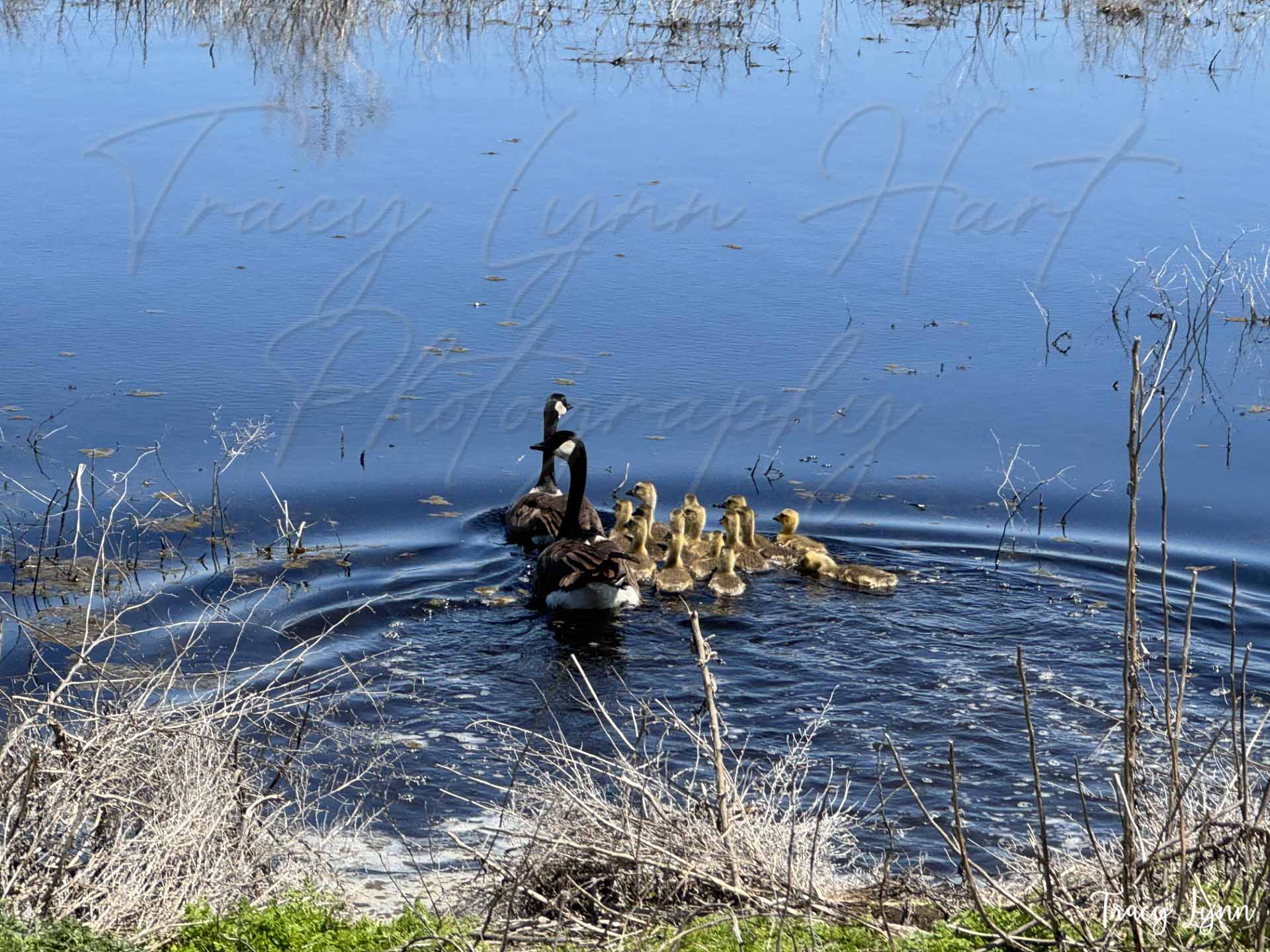
Let’s get ready for spring. The geese are paired up and nesting usually starts around St. Paddy’s Day, so in a month we should have goslings! The Grebes will be doing their mating rituals on the waters, and the ducks will be nesting in about a month!


With water, there is life! I am hoping to capture the spirit of spring this year!

Be Nice Humans
T Lynn

Highway 161 “State Line”

Can a Wildlife Refuge Become A Ghost Town?

Drought:

noun

  1. 1. a prolonged period of abnormally low rainfall, leading to a shortage of water

And lack of snow pack in our neck of the world.

Drought is never a good thing anytime. Not good for the mountains, not good for the farmers and ranchers, not good for the wildlife and waterfowl. It is downright depressing.

In our area, we are in an extreme drought once again. However this year, this early it seems so much different than in the past since I have lived here. Maybe I am just seeing it though the lens differently.

Water is not being released to where it normally goes in the Klamath Basin. One major downfall for this, is the Lower Klamath National Wildlife Refuge. The first migratory waterfowl refuge established by Theodore Roosevelt in 1908. What he must have been able to see back then I bet was amazing.

My post is just a stark look at reality. Yes politics are involved in water always. It is just not something that goes away. And that is sad. What if the Refuge really doesn’t get any more water? Will that affect the migratory route along the Pacific Flyway?

The Pacific Flyway is a major north-south flyway for migratory birds in America, extending from Alaska to Patagonia. Every year, migratory birds travel some or all of this distance both in spring and in fall, following food sources, heading to breeding grounds, or travelling to overwintering sites.

We know first hand what migrates through here yearly. And we know the numbers are low. Also when water is low in the winter, if there is not enough open water for the passing through birds, that brings disease. And we know what happens with that. We lose even more birds. It’s a vicious circle.

We have seen first hand this year the difference with minimal or no water.

The Bald Eagles we used to see everywhere are decreased in numbers, there are only a few places that have water on the refuge. Fortunately those places can’t be accessed by people, it is a sanctuary area for the birds. There are still a few eagles, but not the numbers we have seen in the past. Let me be clear, I am not a biologist or an expert in any means on this subject. I am only writing what I have seen. It is just so different.

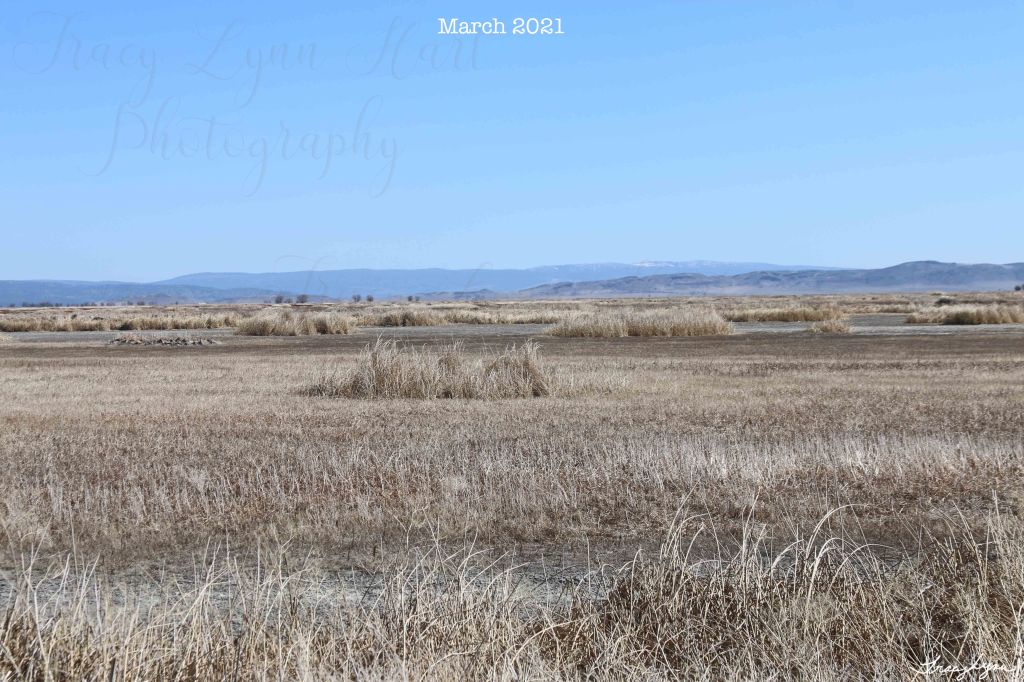
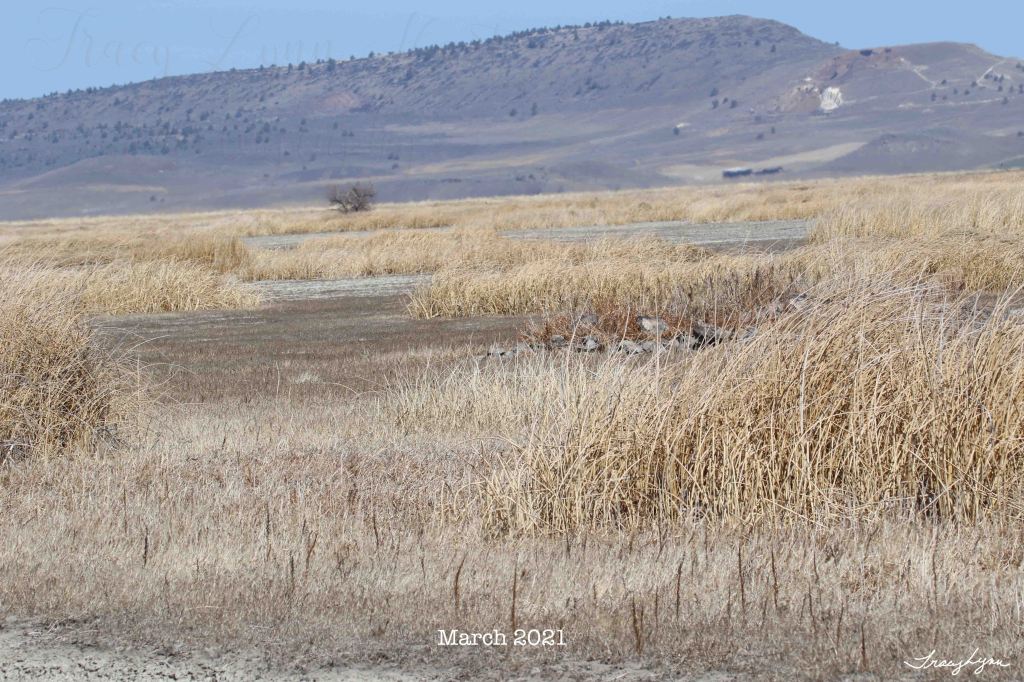
The husband and I went for our weekly drive yesterday to the refuge. I went for the sole purpose of not looking for eagles and other birds, I went to take pictures of the difference between this spring and last spring. Soon there should be goslings. This year I seriously doubt we will see many or if any at all. The canals are ghost towns, with tumbleweeds laying in the mucky water.

This is not a happy canal.

This is a very happy canal!!!

It is devastating from a photographers point of view. This refuge gets hundreds of visitors, we have still seen people out and about, but they are probably wondering where the water is.

We have our favorite place to visit. Full of water and life and sounds. Beautiful bird sounds from geese, coots, wrens, blackbirds and more. I always say I am going to get there at sunrise and film the sun coming up over the water and listen to the sounds. Below are the last few years in our favorite area.

Do I dare show you what it is like now?

I don’t know about you, but I don’t like it one bit.

As you drive around we have other places to see different things. When we drive to the willows road, we shoot the eagles, herons and egrets. Across from where the eagles are there is a huge area that has a ton of water and you can get an amazing video of sounds from all the birds behind you.

Across the road from the willows in 2019
Across the road from the willows in 2021.

Quite a difference eh? Can you imagine what the birds must feel as they know they were getting close to their favorite winter resting ground? They are flying around and all of a sudden their path has been disrupted.

I totally know the feeling little buddy!!!

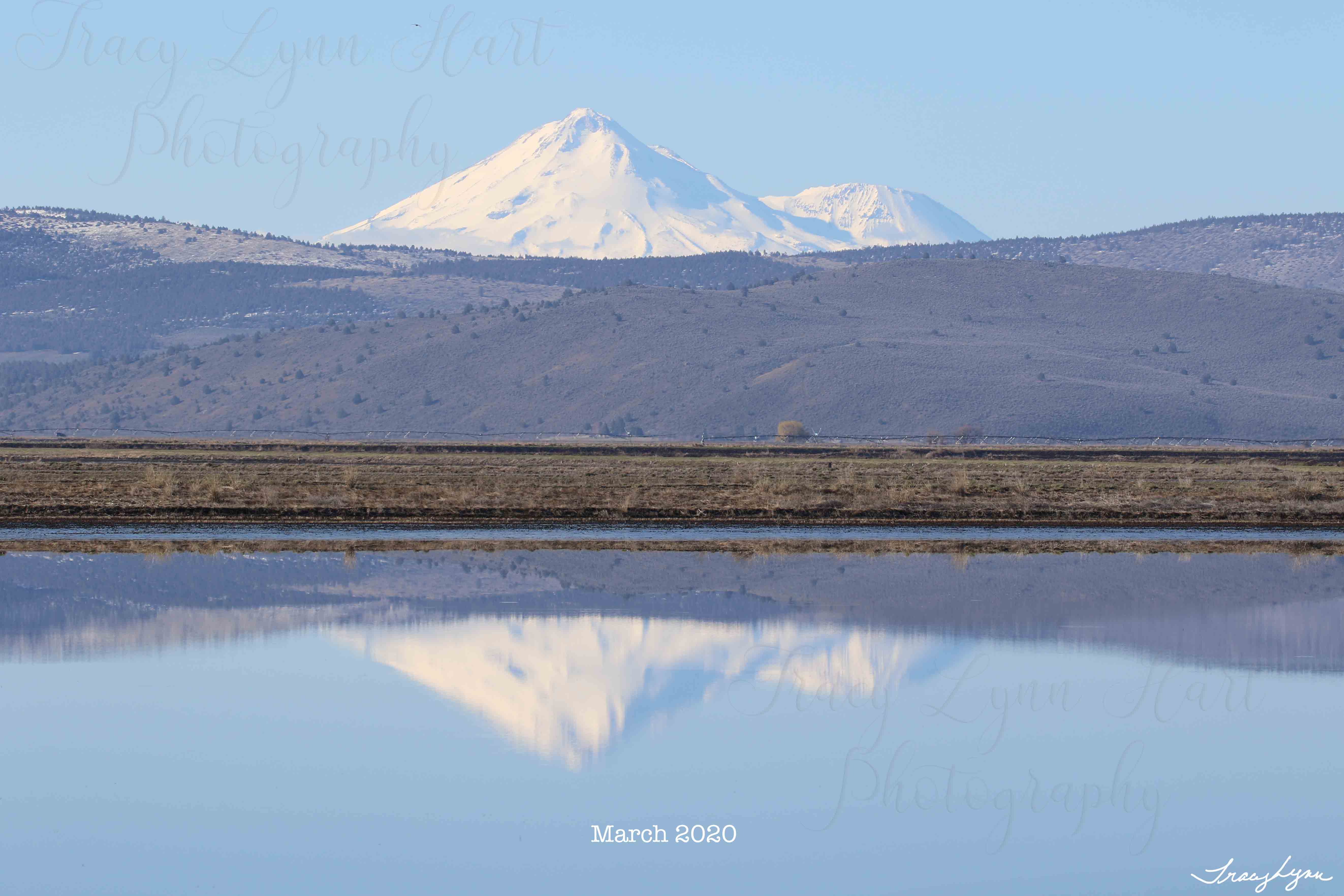
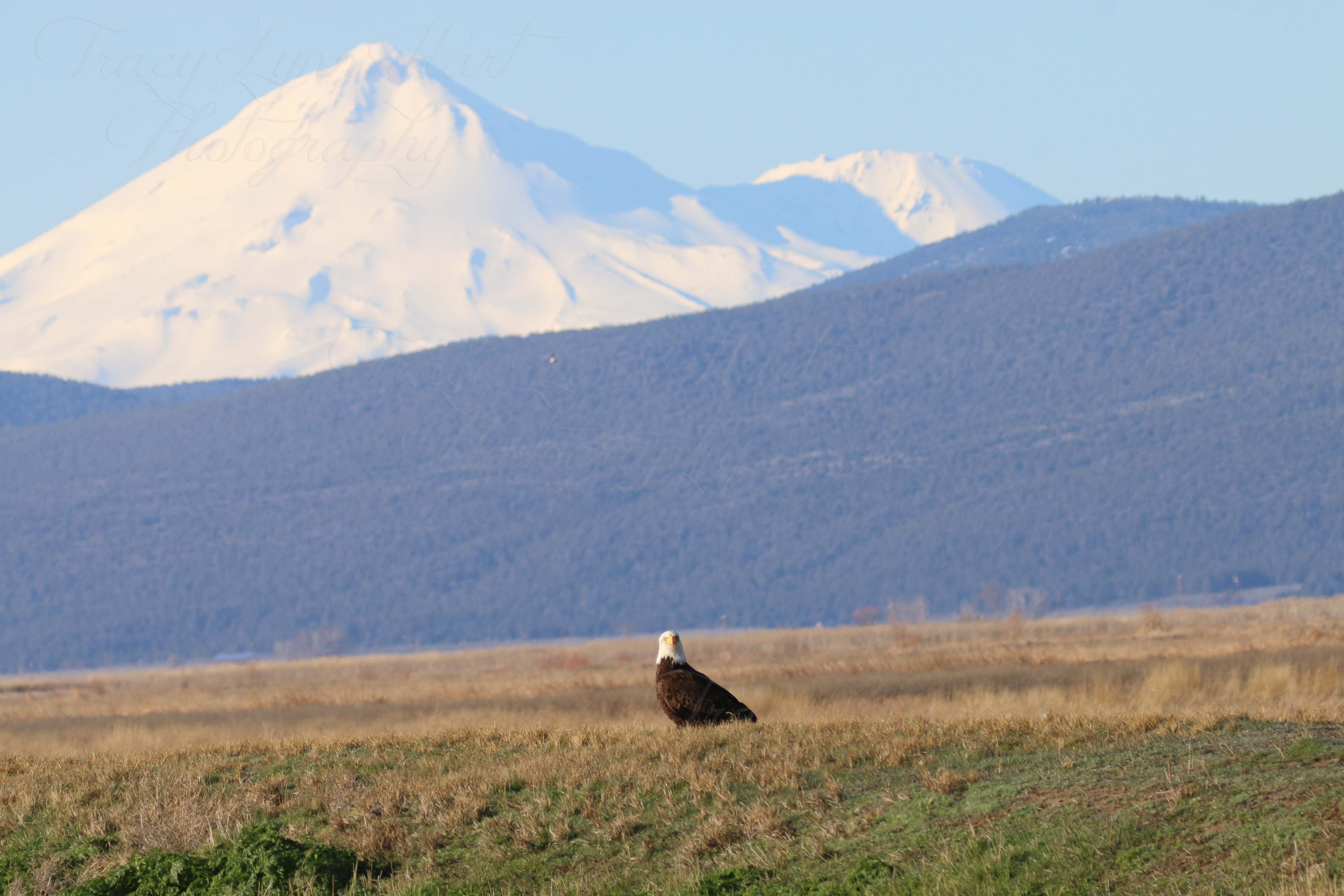
Deep on the south end of the refuge is an amazing area that the birds like to hang out with the view of Mount Shasta in the background. What an amazing reflection in the water as they swim eat and rest.

Beautiful Mt Shasta Reflection
Although Mt Shasta is still beautiful… We have no beautiful reflection.

I think you get the picture of what I am saying. A picture is worth a thousand words. At this point, I have no more words.

We will still go to the refuge, maybe if we get some spring rain. I know you can’t control the weather and the snow pack, but on the other side, one entity holding the strings (or water valves) isn’t right. Once again that is taking you back to politics. And I don’t want those on my page.

We will savor the pictures we have, and enjoy the time we had during spring and summer and maybe this year we will find another route to take.

I don’t know how you feel about this post, but it was just something I needed to get off my chest. I am sad. I don’t like being sad.

Get out there and shoot something new this season! Enjoy the fact that spring is around the corner!!!

Happier Times!!!

Be Nice Humans

Tracy Lynn

Explore and Experience Your Local Wildlife Refuge

When we first learned that we were moving to the Southern Pacific Northwest, we naturally started to research the area in which we were going to move to. The Klamath “Basin”, Klamath Falls Oregon.

One thing we have learned or I learned since I moved up here first, was this is not a valley.  Unlike Southern California, where you have San Fernando Valley, Simi Valley, Antelope Valley, etc … you get the picture. They’re all surrounded by mountains. So therefore it’s a valley.  I totally get that. I lived there for many years. Even in my home state of Montana, I lived in the Bitterroot Valley. But… Klamath Falls is the “Basin”
Here is the difference according to the search I did and we all know everything is true on the internet.

A basin is a depression or hollow on the earth’s surface, which is surrounded by higher land. A valley is also a depression or hollow between hills, mountains and uplands. A basin, which is also called a watershed, is the part of land that is drained by a river and its various tributaries.

So, I will go with the Basin idea, now that I know what the difference is. Kind of. It dates back to lots of history about the Klamath Watershed, and all the other shenanigans dealing with water in this area.

All that said, in doing the research of this area, it was learned that Klamath Falls is located on the “Pacific Flyway”

The Pacific Flyway is a major north-south flyway for migratory birds in America, extending from Alaska to Patagonia. Every year, migratory birds travel some or all of this distance both in spring and in fall, following food sources, heading to breeding grounds, or travelling to overwintering sites.

You can bet that once I learned that, I was all about what kinds of birds migrated to this area.

A large number of bald eagles winter in Bear Valley, located 10 miles (16 km) west of Klamath Falls, near Keno.

Yay!  Bald Eagles!  Last time I saw them in a large number was in 1981 when they followed the spawning habits of the Kokanee Salmon.  Which sadly, I learned a few years ago, they no longer converge on the waters of Glacier Park for this yearly event.

Eagle 04 Blog

Bear Valley, is close to where we live. It is part of the Klamath Basin National Wildlife Refuge Complex.

The complex consists of several refuges;

Lower Klamath National Wildlife Refuge    https://www.fws.gov/refuge/lower_klamath/

Tulelake National Wildlife Refuge    https://www.fws.gov/refuge/tule_lake/

Clearlake National Wildlife Refuge   https://www.fws.gov/refuge/clear_lake/

Upper Klamath Lake National Wildlife Refuge    https://www.fws.gov/klamathbasinrefuges/upperklamath/upperklamath.html

Bear Valley National Wildlife Refuge    https://www.fws.gov/refuge/bear_valley/

Klamath Marsh National Wildlife Refuge   hyperlink not available.

The Lower Klamath National Wildlife Refuge was  Established by President Theodore Roosevelt in 1908 as the Nation’s First Waterfowl Refuge.  

HAwk 01 blog

The Tulelake National Wildlife Refuge was Established in 1928 by President Calvin Coolidge “as a preserve and breeding ground for wild birds and animals“.

Clear Lake Refuge in northeastern California consists of approximately 20,000 acres of open water surrounded by over 26,000 acres of upland bunchgrass, low sagebrush, and juniper habitat. Small, rocky islands in the lake provide nesting sites for American white pelicans, double-crested cormorants, and other colonial nesting birds.  Clear Lake is not open to public access.

Upper Klamath Refuge was established in 1928 and is comprised of 15,000 acres of mostly freshwater marsh and open water. These habitats serve as excellent nesting and brood rearing areas for waterfowl and colonial nesting birds including American white pelican and several heron species. Bald eagle and osprey nest nearby and can sometimes be seen fishing in Refuge waters. A boat is a must for those who wish to explore this refuge. A marked canoe trail is open year round and canoes may be rented nearby. 

Bear Valley Refuge was established in 1978 to protect a vital night roost site for wintering bald eagles. The refuge consists of 4,200 acres, primarily of old growth ponderosa pine, incense cedar, white and Douglas fir.  Bear Valley National Wildlife Refuge also serves as a nesting habitat for several bald eagle pairs. Bear Valley is also closed to public access.

Now that you’ve had your history lesson….
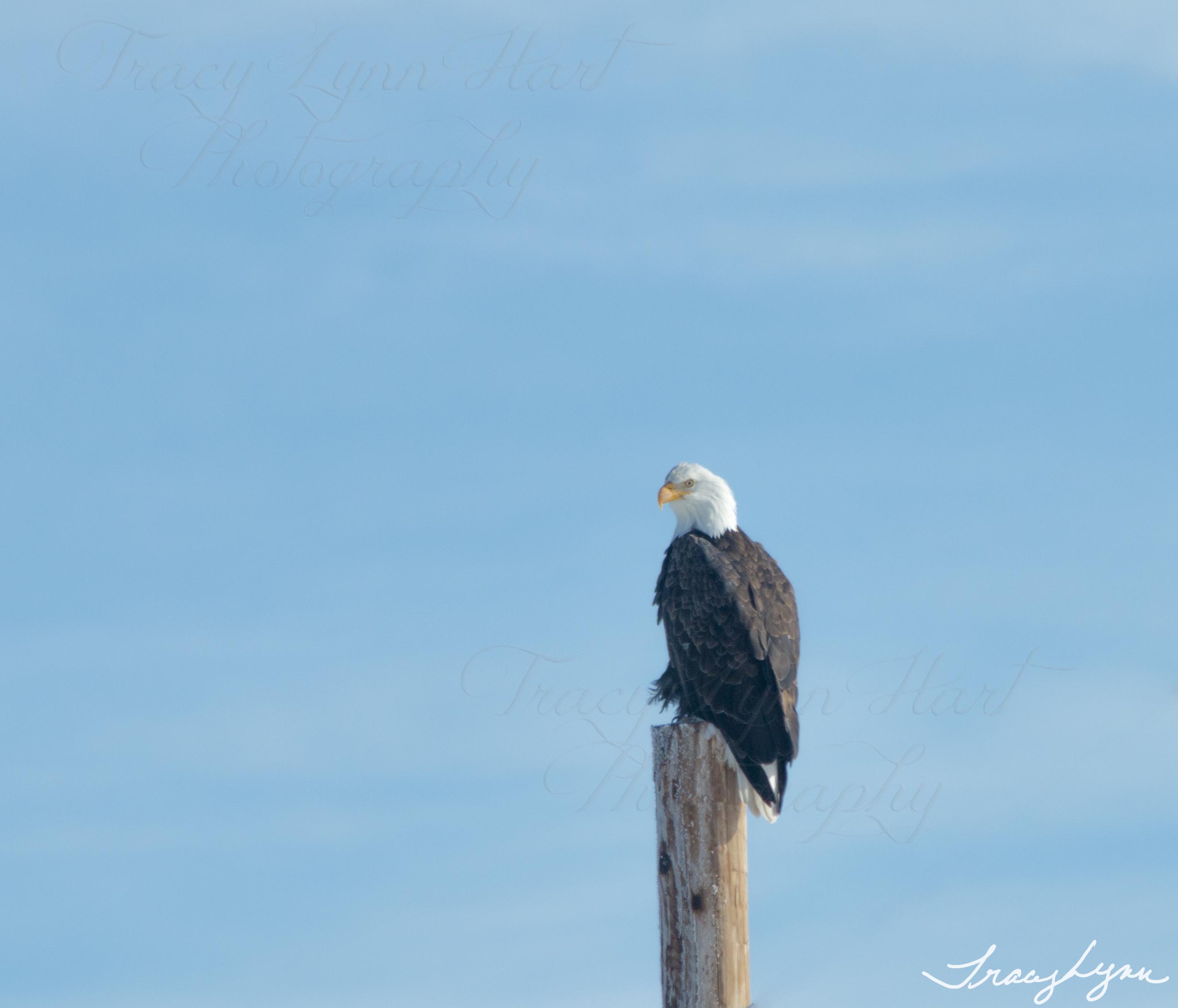
As I mentioned I live near Bear Valley. It is an amazing sight to see Bald Eagles flying over the top of the house, either coming into the area or flying away from. Most likely they’re flying to the Lower Klamath Refuge which is about a ½ hour drive from where we live.
My husband and I are learning the roads in and out of the Lower Klamath Refuge.

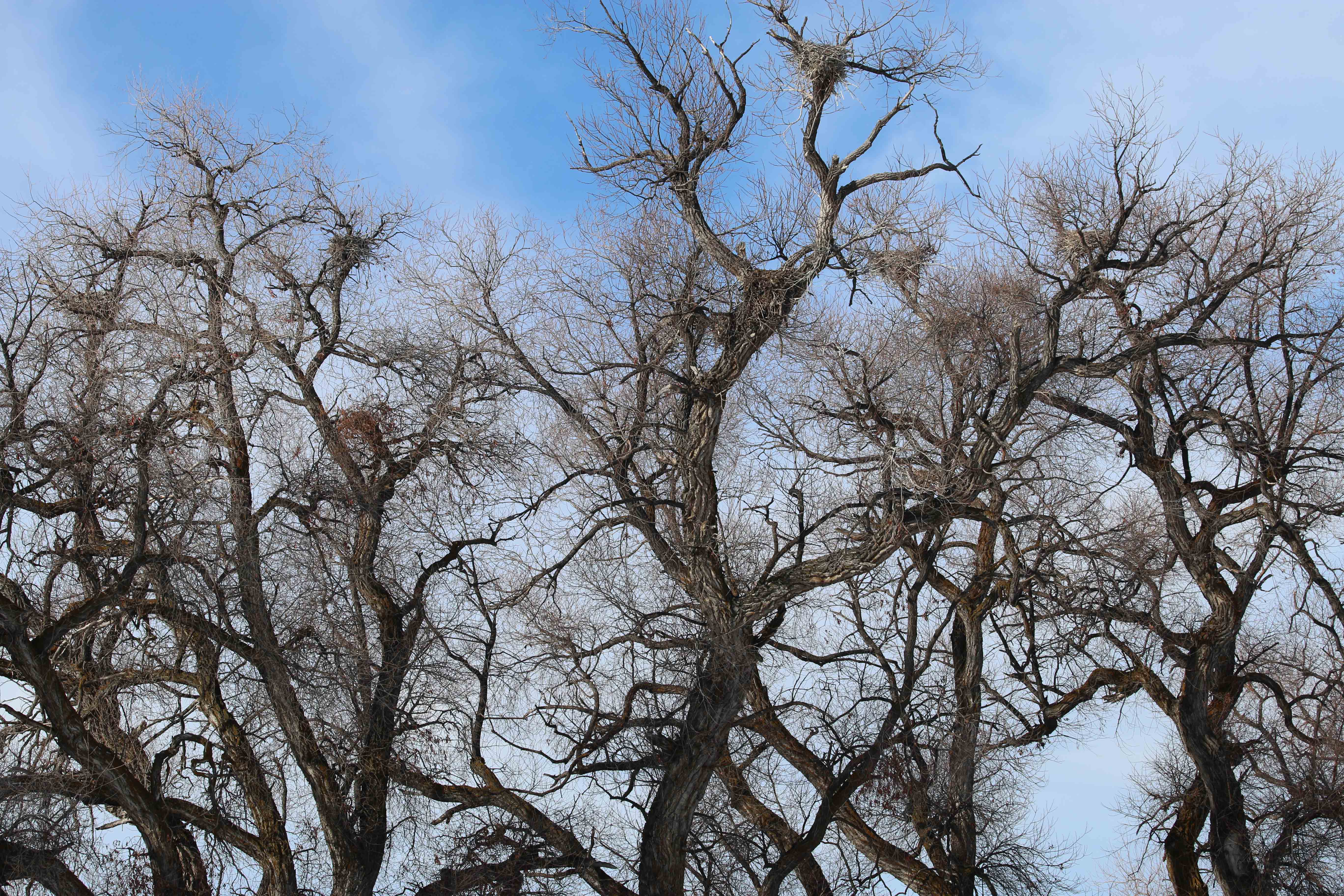
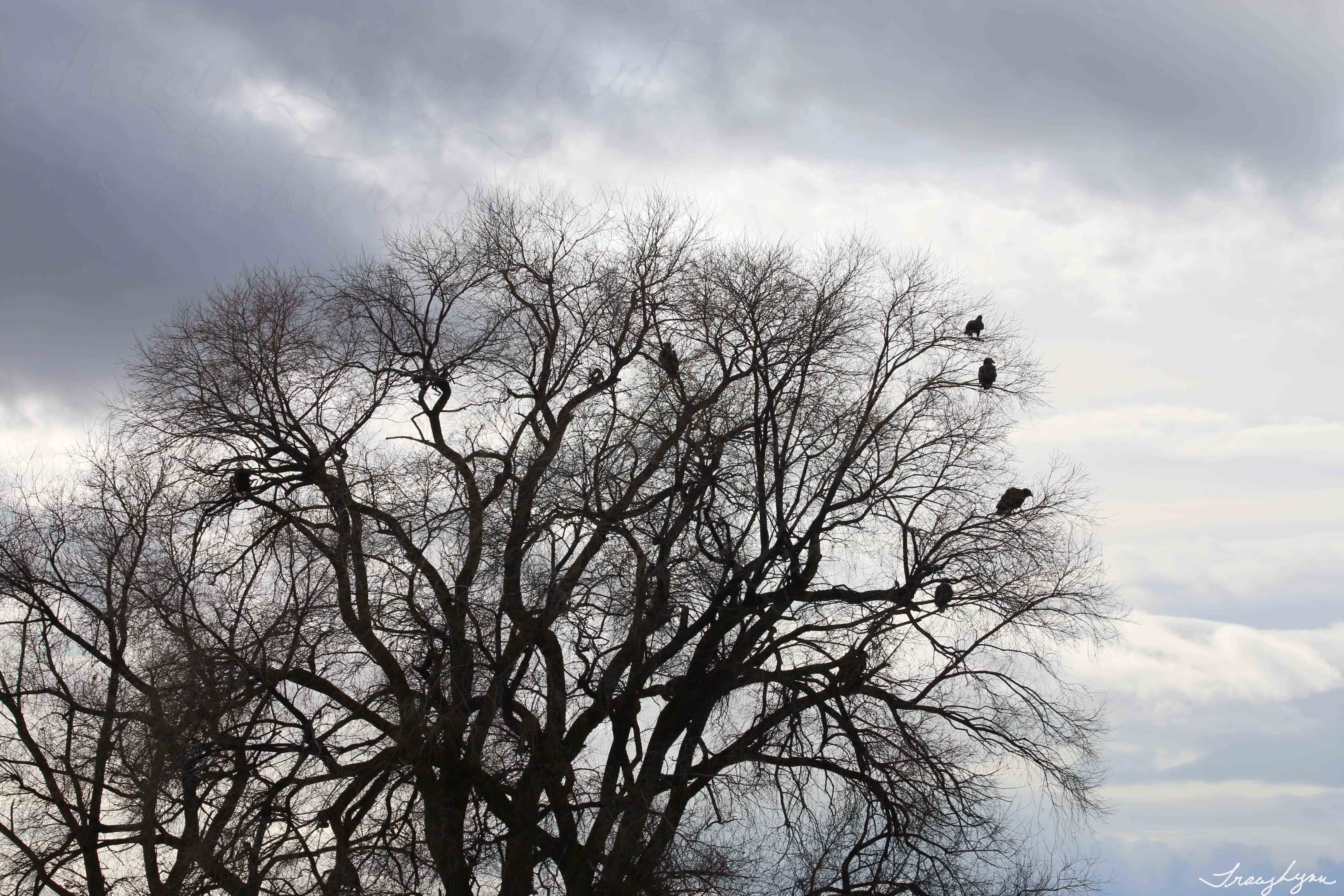
Along the state-line highway (Oregon and California) you can make a turn onto the “Willows” road. This road is a line of willow trees that the Eagles nest in. Why they chose this row of trees I will never know. You can see Eagles, both Golden and Bald, Hawks and Owls in these trees. It is a really cool spot to photograph. The trees just by themselves without the awesome Eagles are interesting. They would make for some awesome scary tree collages in Photoshop. (another story for another time)willow for blog 01

This is really my “first” year photographing the birds in this area.  I mean, I’ve walked around Discovery Marsh, which is located at the Tulelake NWR, and have photographed Egrets, Pelicans and Ducks.  But these past few months have been about the Eagles and Hawks.

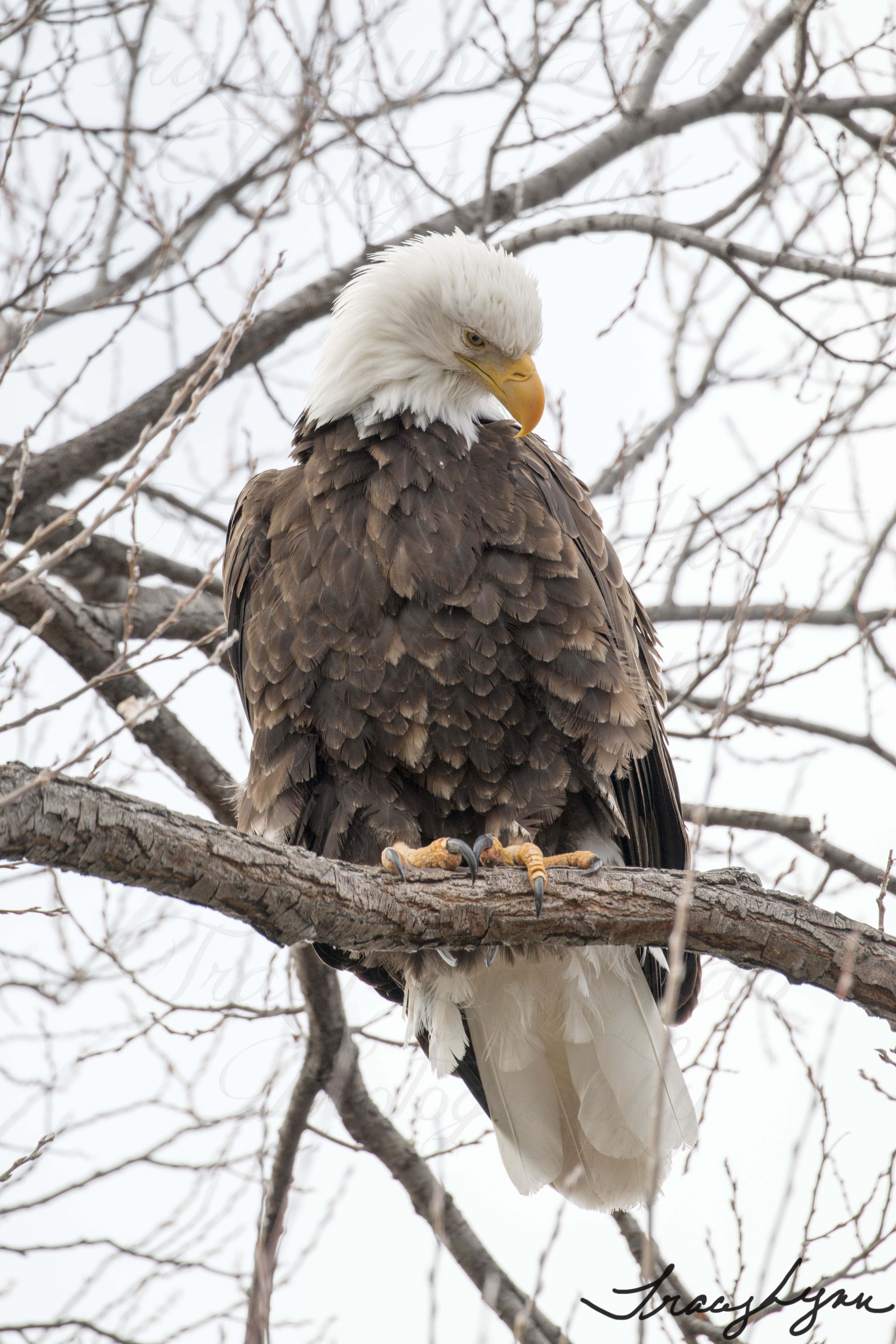
The beginning of February, we were able to see the Bald Eagles on Township road, which is a way I go to and from work, and we use it to come home from town.  Sometimes along our route to town or to breakfast in Malin, we would count Hawks and Eagles and our numbers would be in the 20’s  for hawks and the Teens for the Eagles.  Now that it’s nesting season, they aren’t around as much. I also imagine it has a lot to do with the farmers flooding the fields, so the mice and whatever hang out in the fields, have moved to higher ground.

Eagle 01 blog

On our weekly trek to Malin for breakfast, we pass the Willows Road and we wind through the Refuge on the gravel roads.

Where eagles nest blog

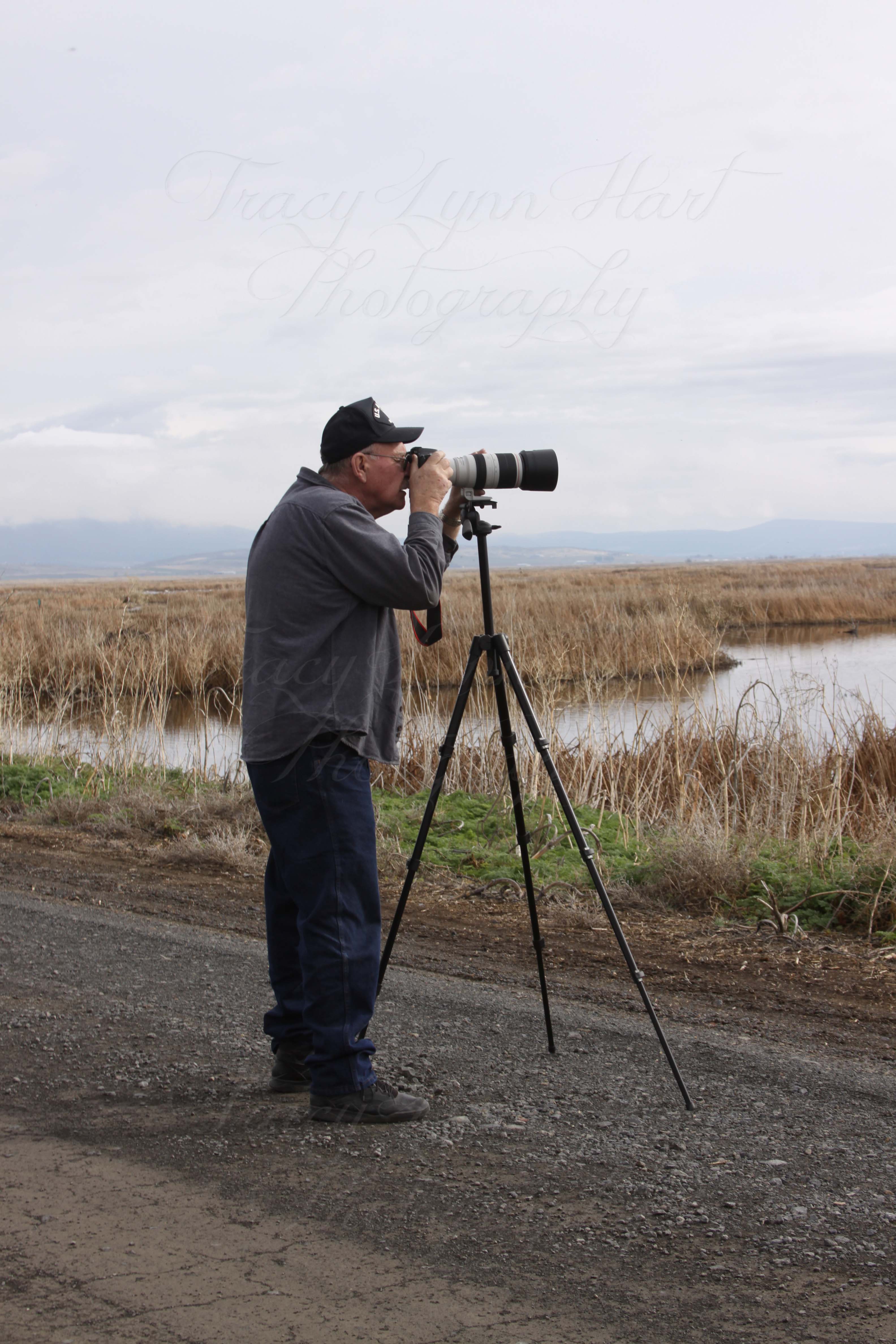
I have mentioned Malin Oregon before, but if I haven’t done so here, it is a farming community about 45 minutes from where we live.  My husband and I have been known to take a 6 hour round trip to and from Malin, via the way of the Refuge and Lava Beds National Monument.  All for the perfect “shot of the day”.   I never would have imagined we would spend such fun times most every weekend (weather depending) touring around. It’s awesome.  And I discovered that is makes sense to take two cameras out instead of one. We can both shoot to our hearts content.

Tlynn Shooting blog copy

Shooting blog

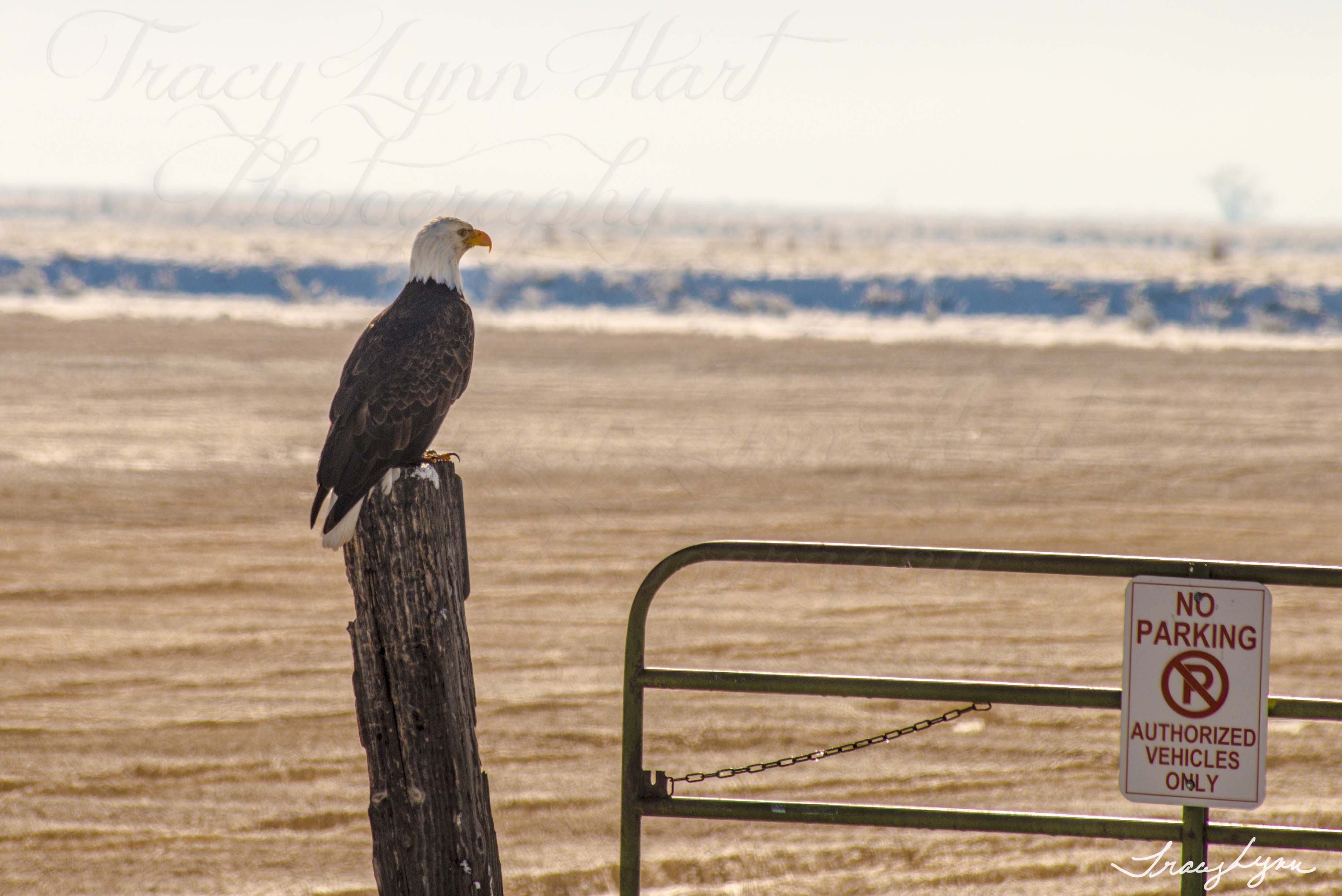
I was saddened when we were headed out one weekend day and were getting ready to turn down the “Willows” road and it was CLOSED

Eagle no parking 01blog

I totally understand though.  The eagles are nesting and the Refuge does this to reduce disturbances for the Eagles and other nesting birds.  I did so love that drive to see them all. In hopes of a great photo op!  The best were when the eagles were on the closer side of the road.

Eagle 09 blog

Bald and Goldens in Tree blog

If you haven’t experienced your local Wildlife Refuge, I encourage you to do so.  Take a little time away from the rat race of the city noise and your electronic devices,  find a refuge, or even a park,  just to unplug. Listen to the sounds of the nature.

Eagle and Shasta Blog

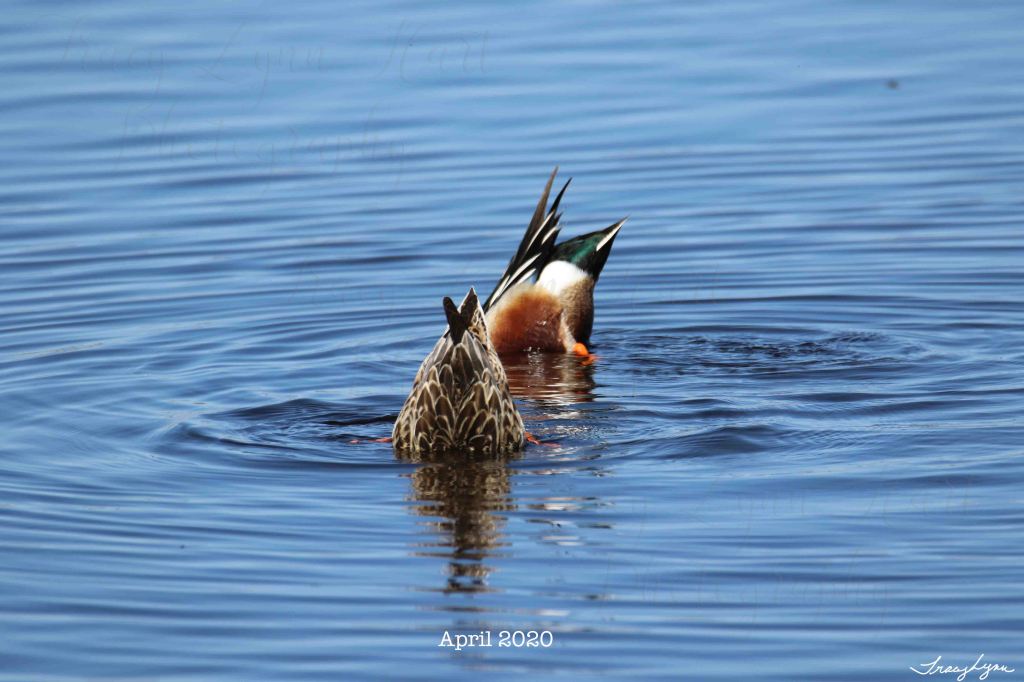
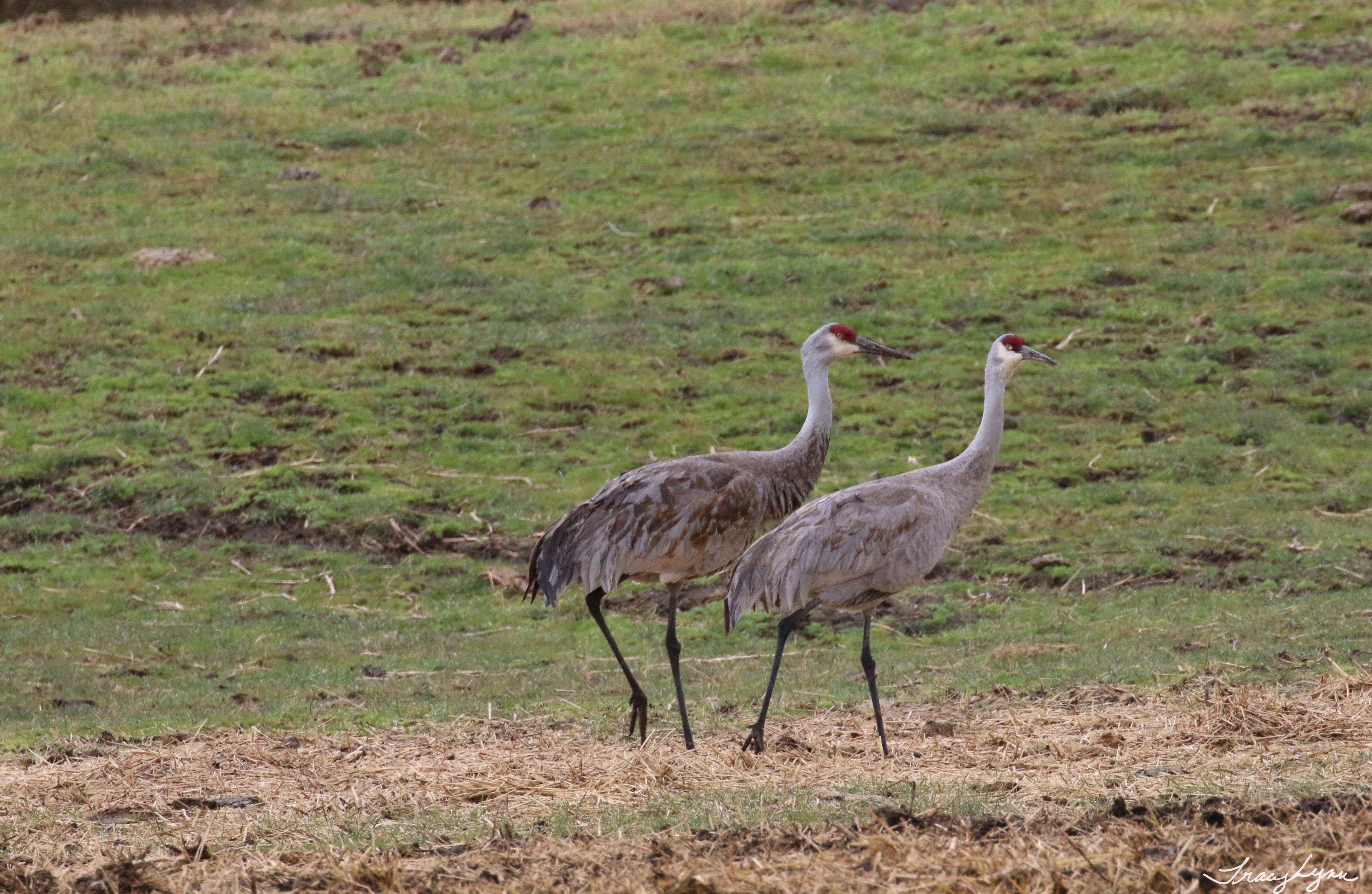
There is more to see on our  refuge than Eagles.  We have many migrating birds, Snow Geese, Tundra Swans,  Canada Geese, Greater White Fronted and lots of ducks. Right now the Coots are abundant and not so bright, but you can see  Northern Shovelers that look like a Mallard but they’re bills are black and shaped different, Buffleheads, Golden Eye, Ruddy Ducks, Pintail Ducks and a host of other ducks!  We were lucky enough to see Sandhill Cranes, a bit off the Refuge, but they are here as well. Soon we’ll have the White Pelicans, and other summer type birds, more Herons, Egrets, and Raptors.

Tundra Swans blog

Geese and Swans 02 blog

Golden 02 blog

Sandhill 01 blog

I am learning a lot more than I ever thought I would about birds.   It’s fun to ID a bird once you’ve seen it.  I am fortunate to work where most of the men hunt, so they can ID a duck or goose for me.

Shasta birds blog 01

I hope to visit a couple different Wildlife Refuges while the husband and I explore different areas this summer.

Even if you don’t have a camera, take a day trip.  Use your cell phone camera,  find a path to hike, a dirt road to drive down, something that gets you out of the house after a long winter!

Best of all.. Record your trips, and Have Fun.

The End Blog

Be Good Humans

T Lynn